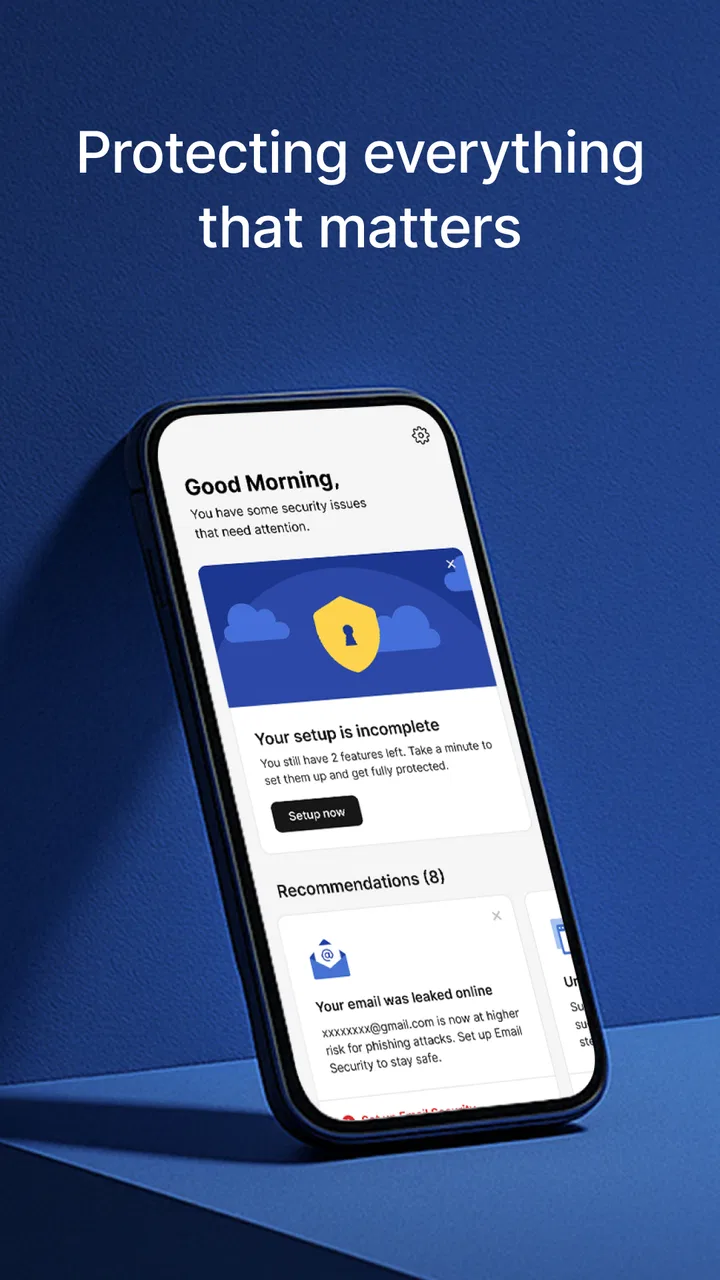
Guardio - Mobile Security
- 4.2
- Rating
- 1.00M
- Installs
- Free
- Price

 Analysis by App-foxy
I installed Guardio - Mobile Security with a fairly ordinary problem in mind: I wanted a simpler way to think about risky browsing and identity protection on my phone, without turning security into a daily chore. Guardio is a free tools app from Guardio, aimed at protecting browsing and personal identity rather than replacing every security setting already built into a phone. That distinction matters, because it tells you what kind of help to expect from it.
My first impression was that the app makes the most sense when used as part of a complete routine. It starts with a moment of uncertainty—a suspicious message, an unfamiliar website, or a concern that personal details may be exposed—and then guides you toward a safer decision. The useful question is not simply whether it is installed, but whether it fits into the way you already browse, check messages, and react to warnings.
The app is available at no upfront cost and is rated for Everyone, which makes it approachable for a broad range of users. Its current version is 2026.95.0, and it requires Android 10 or newer. Guardio has built a substantial audience around it, with more than a million installs and an average rating of 4.2 from roughly twenty-five thousand ratings. Those figures suggest a product that many people find useful, while also leaving room for the individual experience to depend on expectations and setup.
You May Also Like

 Blood Strike: 2.5 Anniversary
Blood Strike’s Loadouts Turn Every Drop Into a Tactical Gamble
A close look at Blood Strike’s custom loadouts: how fast access to signature weapons reshapes its battle royale rhythm, rewards preparation, and narrows the gap between fights.

 Pandora - Music & Podcasts
Pandora’s Music Is Easy to Start, but Harder to Recover
Pandora’s strength is its low-effort path from a seed to a station. Its weak spot is how much confidence it asks you to place in connection, setup, and quiet recovery.

 8 Ball Pool
 Is Built on Rivalries, Rematches, and Routine
A close look at the rivalries, rematches, shared routines, and unanswered safety questions that turn a quick pool match into a persistent mobile community.

 Samsung Music
’s Quiet Strength Is Playing What You Already Own
Its reach comes less from spectacle than from dependable access to a personal library. That simplicity is both the app’s strongest retention engine and its ceiling.

 AccuWeather: Weather Radar
AccuWeather Review: A Quick, Clear Forecast for Everyday Decisions
For everyday plans, the best forecast is the one you can understand quickly. AccuWeather makes rain timing, radar, and local conditions easy to act on, with a few trade-offs.

 Hill Climb Racing
Why Hill Climb Racing Still Turns Crashes Into One More Run
A tiny car, a bumpy hill and one more upgrade: Hill Climb Racing keeps resurfacing because its simple chaos makes every near-miss feel personal.
More From Our News Desk



From a suspicious link to a safer browsing decision
I find the most useful way to judge a suspicious link is to slow down before it becomes a login or payment decision. This section follows that moment from the first uneasy feeling to a safer next step, while keeping the app’s role in perspective. The same habit matters even more when a phone is shared, because the person who receives the message may not be the person who usually manages the account.
Starting with the situation that actually needs help
Security apps are easiest to judge when they are placed in a realistic situation. Imagine receiving a message that appears to come from a delivery company, a bank, or a familiar online service. The message asks you to tap a link and confirm information. On a small phone screen, the address may be difficult to inspect, and the page may look convincing enough to create pressure. This is where Guardio’s focus feels relevant: it is designed around browsing and identity protection, so the first useful handoff is from the message or browser session to the app’s protective layer.
I would not treat the app as permission to click anything casually. Its value is better understood as a second line of judgment. I still pause before opening an unexpected link, but Guardio gives that pause more purpose. Instead of relying only on instinct, I can use the app’s security guidance as part of the decision. That is a small behavioral change, yet it is more practical than a security tool that only feels useful after something has already gone wrong.
This also explains who will appreciate it most. Guardio is a good match for people who browse heavily on a phone, regularly receive links through messages, or want a clearer security routine without learning technical terminology. It can also help someone who is responsible for a less confident phone user and wants a straightforward layer of protection to discuss with them. It is less compelling for a person who wants a full device-management suite, advanced network controls, or detailed technical reports.
Moving from the alert to the next action
The important part of a mobile security workflow is what happens after a warning. A vague alert can create more anxiety than safety. In my experience, the best approach is to stop the current action, read what Guardio is indicating, and then decide whether the link or page is worth continuing with. If the warning concerns a page that is asking for login details or personal information, I would close it rather than trying to prove that it is harmless.
That sounds obvious, but the handoff between detection and behavior is where many protection tools become ineffective. A warning is only useful if it arrives early enough and explains the practical consequence. Guardio’s browsing-and-identity focus makes the decision more concrete: do not enter sensitive information, do not reuse a password in response to an unexpected request, and verify the service through a route you already trust.
A useful habit is to separate the suspicious message from the real account. If a text claims to be from a service I use, I open that service through its normal app or a manually entered address instead of following the message. Guardio can support the safer browsing choice, but it cannot replace this basic verification step. The strongest result comes from combining the app’s protection with a deliberate response.
Where identity protection changes the workflow
Browsing safety and identity protection overlap, but they are not identical. A dangerous page may try to collect a password, payment detail, contact information, or other personal data. The immediate risk is not just the page itself; it is what happens after information has been submitted. This is why I see Guardio as more useful before the mistake than after it.
For example, if I am shopping from my phone and encounter an unfamiliar store offering an unusually attractive deal, I would use several checks before entering any details. I would inspect the address, look for consistent business information, consider whether the payment request feels normal, and avoid creating an account with a password I use elsewhere. Guardio belongs in that sequence as an additional safety check, not as a substitute for all of it.
The practical strength is prevention at the moment of choice. That is more valuable than a dashboard I never open. The trade-off is that prevention depends on attention. If I ignore warnings, approve questionable actions, or willingly provide information to a convincing scammer, no mobile security app can guarantee a safe outcome.
Handoffs between the app, the browser, and the user
A phone security workflow usually crosses several boundaries. A message may begin in a messaging app, the link may open in a browser, the warning may be associated with Guardio, and the final decision still belongs to me. Each handoff can introduce friction. A user may wonder whether to return to the original app, whether a page is safe enough to continue, or whether a warning means the phone itself is infected.
That uncertainty is worth acknowledging. Guardio is not the same thing as a complete operating-system security center, and I would not interpret every warning as proof that the entire device has been compromised. The more sensible reading is that a particular browsing or identity-related situation deserves caution. That framing prevents unnecessary panic and leads to better decisions.
Another useful handoff occurs when a warning affects an account rather than just a page. If I suspect that I entered credentials into a questionable site, I would move immediately to the legitimate service, change the password, review active sessions where available, and enable stronger sign-in protection if the service supports it. Guardio may be part of the discovery process, but the account provider becomes responsible for the recovery steps. Knowing where the app ends is just as important as knowing where it helps.
What the free starting point offers
The free entry point makes it easy to try the app without committing money first. That matters for a security product because many people only discover the need for protection after a suspicious incident. I can begin by seeing whether Guardio fits naturally into my browsing habits instead of paying before I understand its role.
There are in-app purchases priced at $14.99 per item, so users should pay attention to any upgrade path and decide whether additional paid functionality is worthwhile for their situation. I would not upgrade simply because a security message sounds alarming. I would first identify the exact problem I am trying to solve, then compare the offered benefit with the protections already available through my phone, browser, email provider, and important online accounts.
This is one area where the usual alternatives can be better for some people. A browser’s built-in warnings may be enough for someone who rarely follows links and keeps their accounts protected with unique passwords. A dedicated password manager may be more valuable for someone whose main weakness is reused credentials. A full security suite may make more sense for a user who wants broader device controls. Guardio’s advantage is its narrower, easier-to-understand emphasis on browsing and identity protection.
A realistic everyday result
Consider a normal weekday: I receive a message about an account problem while commuting, tap the link without thinking, and land on a page that asks me to sign in. The screen looks polished, and the wording creates urgency. In that moment, the best outcome is not a dramatic technical explanation. It is a clear interruption that gives me enough reason to stop, close the page, and reach the account through its official app instead.
If I follow that workflow, the result is a safer outcome even if I never learn every technical detail behind the warning. I have avoided entering credentials, preserved control of the account, and reduced the chance that a rushed action becomes a larger recovery problem. That is the kind of everyday benefit I associate with Guardio: helping turn a moment of uncertainty into a pause and a safer alternative.
The result is less impressive when I expect the app to clean up every digital risk automatically. Protection is not a single switch. It involves the browser, the operating system, the account provider, and my own choices. Guardio can make one part of that chain more visible, but it cannot remove the need for sensible account hygiene.
Where the flow breaks down
The first weak point is overconfidence. A user may assume that installing Guardio means every unsafe message, fraudulent page, and identity threat will be caught. That is too broad an expectation. New scams can look like ordinary communication, and some harmful actions happen through trusted services or after information has already been shared. I would keep the app, but I would still question unexpected requests and avoid rushing.
The second weak point is interruption fatigue. Security warnings are useful when they are relevant, but repeated prompts can become background noise if the user does not understand what action is expected. Anyone who tends to dismiss alerts automatically should think carefully before relying on Guardio. The app works best when the person using it is willing to stop and assess the situation.
The third issue is scope. Guardio is not the right choice if your priority is a detailed technical view of device performance, extensive parental controls, or a replacement for every privacy and account tool. Its category is tools, but that does not mean it is an all-purpose maintenance application. I would choose a different solution—or combine it with other tools—if my needs extend far beyond suspicious browsing and identity-related risks.
There is also a practical cost decision. Although the app can be started for free, paid items may appear at $14.99 each. That does not automatically make the upgrade poor value, but it does mean I would compare the purchase with alternatives before confirming it. If my main goal is stronger passwords, a password manager could address that more directly. If my main goal is safer web browsing, the browser’s own protections may already cover much of the routine use case.
Who should install it, and who should skip it?
I would recommend Guardio to a phone user who wants a visible, approachable layer between suspicious links and sensitive information. It is especially suitable for people who browse from messages, shop through unfamiliar sites, or want help forming a repeatable response to online warnings. The Everyone age rating also makes it easier to consider for a household, provided each person understands that an alert is a prompt to think, not a guarantee that every action is safe.
I would be more cautious about recommending it to technically confident users who already have a carefully managed setup and want granular controls. They may find more value in specialized tools for passwords, account monitoring, browser privacy, or device administration. I would also skip it as a sole solution if I were dealing with a confirmed account takeover or a serious identity incident. In that case, contacting the affected service, changing credentials from a trusted device, and reviewing financial or account activity should take priority.
My final assessment after following the workflow
Guardio - Mobile Security works best when I treat it as a practical checkpoint rather than a magic shield. It begins with a suspicious browsing situation, helps create a pause, and can steer me away from handing personal information to the wrong page. The strongest benefit is behavioral: it encourages a safer handoff from an unexpected message to a verified destination.
Its limitations are equally clear. It cannot make careless clicking safe, replace account recovery procedures, or cover every security need on a phone. Some users will prefer built-in browser protection, a password manager, or a broader security suite. Others will appreciate having browsing and identity protection presented in a more focused way, especially when they want a free starting point and do not want to study technical security tools.
With a 4.2 average and a large installed audience, Guardio is clearly not an obscure experiment, but popularity should not decide the installation by itself. I would choose it if my main concern is making safer decisions around links, pages, and personal information. I would keep my expectations realistic, read warnings instead of dismissing them, and use the legitimate account apps and services for any recovery work. Used that way, Guardio - Mobile Security is a sensible companion for everyday mobile browsing, particularly for people who want protection that fits into a real workflow rather than another complicated dashboard.
FAQs for Guardio - Mobile Security
01What is Guardio - Mobile Security, and what does it protect against?
Guardio - Mobile Security is designed to help protect your phone and online activity from common digital threats. Its features may include checking suspicious links, identifying potentially dangerous websites, monitoring for signs of data exposure, and providing security recommendations. It is mainly a preventive tool, so it should complement—not replace—your phone’s built-in security, safe browsing habits, strong passwords, and regular software updates.
02Does Guardio - Mobile Security work on both Android and iPhone?
Guardio’s available features can vary depending on whether you use Android or iOS, because each platform provides different permissions and security capabilities. Before downloading, check the official store listing for your device to confirm compatibility, supported operating-system versions, and the exact functions included. Some tools may operate through a browser extension, mobile browser, or account dashboard rather than directly scanning every part of the phone.
03Is Guardio - Mobile Security free to use?
Guardio may offer basic protection at no cost, while advanced features can require a subscription or trial. The exact price, billing period, and included tools may differ by region and platform. Carefully review the in-app purchase screen before starting a trial, especially the renewal terms and cancellation instructions. A free download does not necessarily mean that every security or privacy feature is free.
04Will Guardio slow down my phone or affect battery life?
The impact should generally be limited when Guardio is used for link checking, browsing protection, alerts, or account monitoring. However, any security application that runs background services, sends notifications, or performs regular checks can use some battery, mobile data, and system resources. If you notice unusual battery drain or repeated alerts, review the app’s permissions and notification settings and make sure you are running the latest version.
05What information does Guardio collect, and is it safe to use?
Before installing Guardio, read its privacy policy and the permissions requested by the version available for your device. Security services may need information related to browsing activity, links, device details, account status, or detected threats in order to provide alerts. Avoid granting permissions that seem unrelated to the advertised features, and download only from an official app store. Also enable account protection, use a unique password, and keep the application updated.
Pros
- Blocks malicious websites
- phishing attempts
- and suspicious links while browsing.
- Identity monitoring can alert you when personal information appears in data leaks.
- Helps identify risky apps and potential security threats on your device.
- Simple interface makes security checks easy for non-technical users.
- Offers extra privacy tools
- including protection against intrusive online tracking.
Cons
- Many advanced security and privacy features require a paid subscription.
- Some protection tools may need extensive device permissions to work properly.
- Identity monitoring depends on the personal information you choose to provide.
- Security alerts can occasionally feel repetitive or overly cautious.
- May use additional battery or background resources while protection stays active.

Guardio - Mobile Security
Gallery